Making ad videos with AI keeps getting easier. Give it a few product photos and a short description, and it can generate visuals, music, a voiceover, even a finished ad. But for a brand, speed is only the first step.
Does the ad grab attention? Does it explain the product clearly? Are the brand name and logo right? If something needs to change at the last minute, can you change just that, without remaking the whole video? Those questions decide whether an AI ad can actually be used.
To see how different tools hold up in practice, we tested ChatGPT, InVideo AI, Captions and Omneky using product briefs from 6 brands, and ended up with 32 finished ads.
We scored them on five things: creative execution, aesthetics, messaging, brand accuracy and workflow.
Two results pulled in opposite directions:
Omneky made the highest-scoring creative of the round, 92 points for a single ad, but another brand's logo showed up at the end. ChatGPT had the highest brand accuracy score, 97.2, but its videos looked more like a slide deck that moves.
The short version: in this test, no AI tool could reliably deliver ads that were ready to publish without review. The most creative tool tended to make brand errors, and the most brand-accurate tool had no real ad ideas.
The best storyteller ends on someone else's logo
The ad mentioned above was made by Omneky for the screen-recording tool Loom.
The idea is complete. It opens with a pile of sticky notes flying up, cuts to a recording screen, then to a colleague opening the video to watch. The voiceover keeps building on "showing is easier than explaining." That is exactly what Loom wants users to remember, and the visuals say it.
This ad scored 92 for creative execution, the highest of any ad in this round.
But in the last few seconds, the logo on screen belongs to another brand, Pythra.
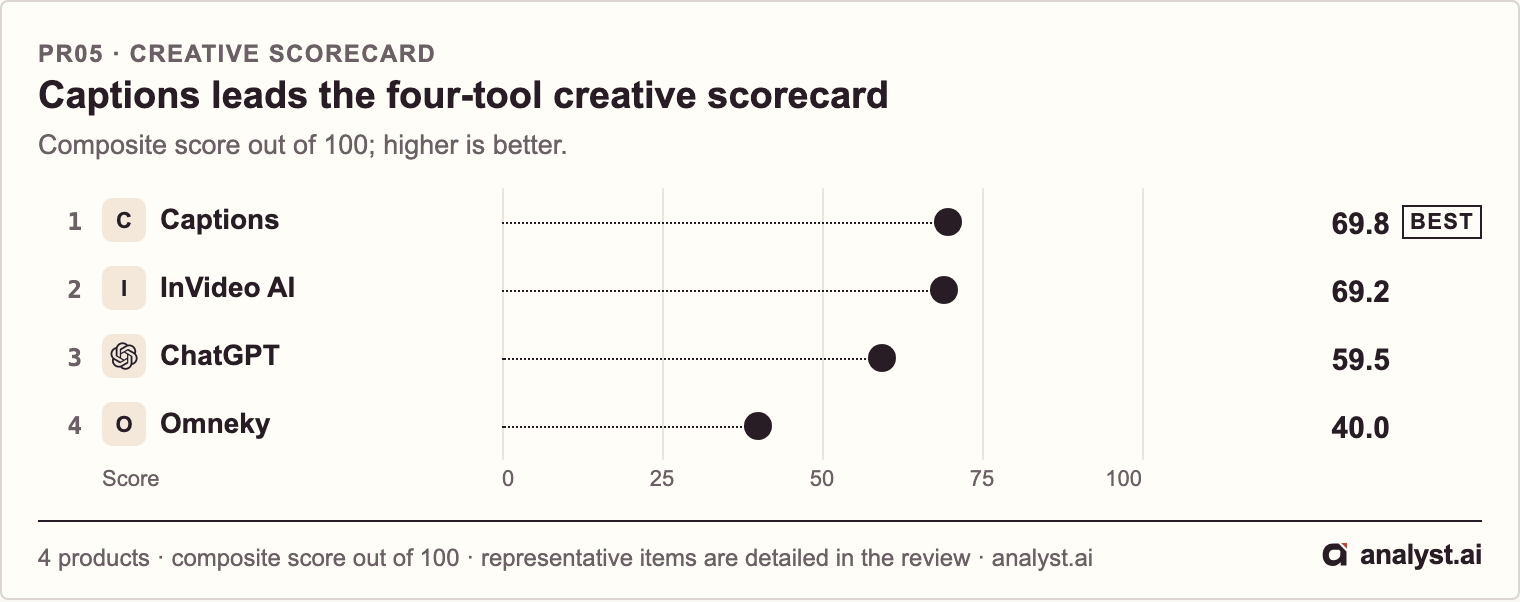
Figure 1. Composite and representative-item scores for the four AI video ad tools. Filled dots are composite scores; hollow squares are representative-item scores.
This wasn't a one-off. Among the ads Omneky made for Pythra Forge, brand names were misspelled, and text the AI redrew turned into gibberish.
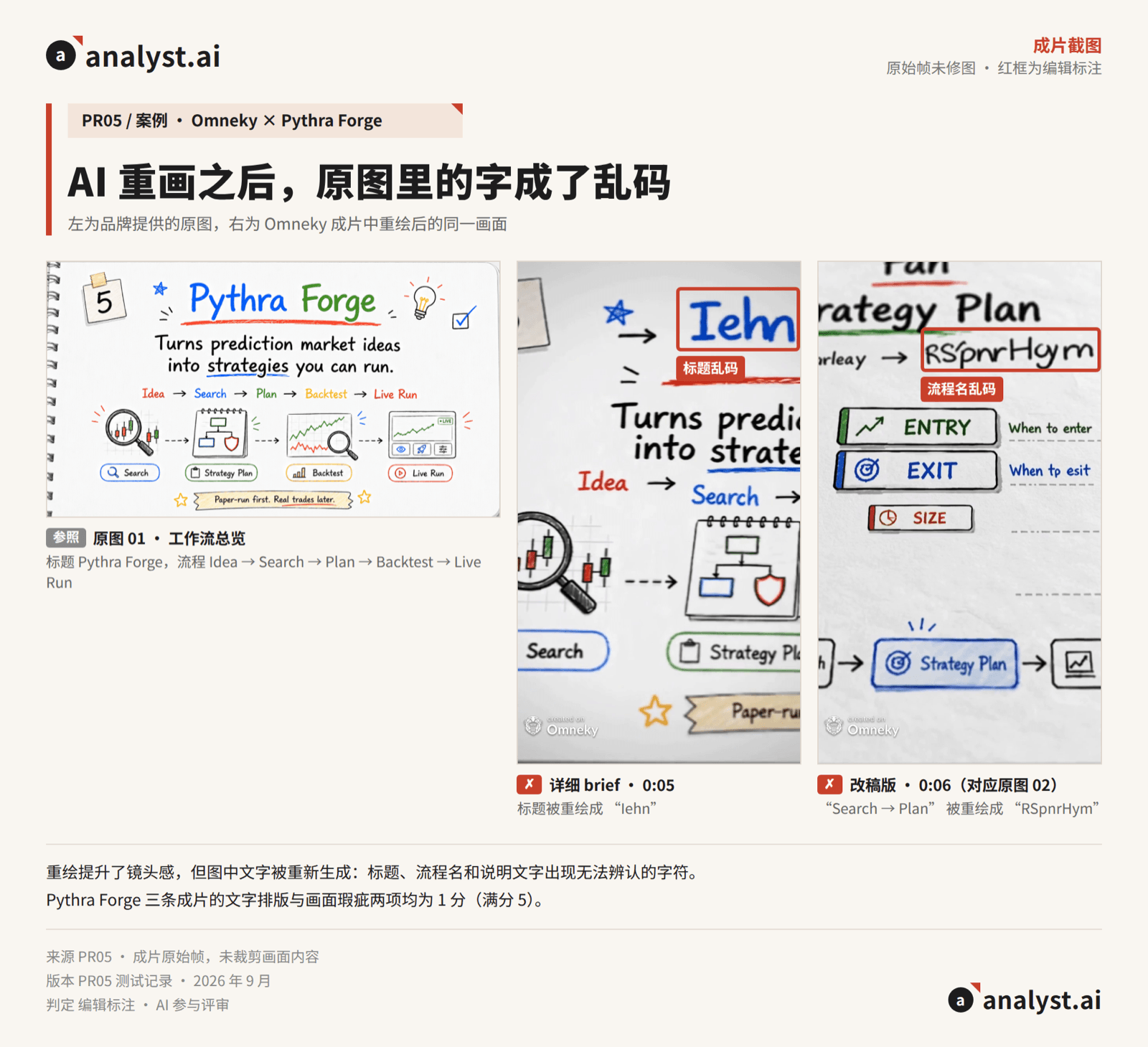
Figure 2. Left: the original Pythra Forge image. Right: the frame after Omneky redrew it. The title and workflow names have become unreadable characters.
The cause isn't clear yet. Test screenshots show Omneky's generation panel had loaded another brand's settings. Pythra's logo may have ended up in the Loom ad because of the tool itself, or because brand settings were mixed up during testing.
For the person using it, though, the conclusion is the same.
However good an ad's creative is, if the brand name or the closing line is wrong, it can't run. A client won't forgive another brand's name on the end card because the opening looked good.
Think of Omneky as a director who shoots well but misspells the client's name. Its ideas are worth borrowing, but someone has to watch every ad start to finish before it goes out.
All the facts right, and it looks like a slide deck that moves
If Omneky's problem is being too bold, ChatGPT is the opposite.
It scored 97.2 on brand accuracy, the highest of the four, and 95.4 on messaging. What the product is, its selling points, what the closing line should say: it got nearly all of it right. Not one of its 18 ads got the brand wrong.
But watch these ads and most of them are product photos appearing one after another with selling-point text, ending on the CTA. All the information is there; it just doesn't feel like an ad.
Besides explaining the product, an ad has to make people stop in the second or two it's on their screen. ChatGPT's ads were weak on openings, visual ideas and sound. None of its 18 cleared this round's creative threshold.
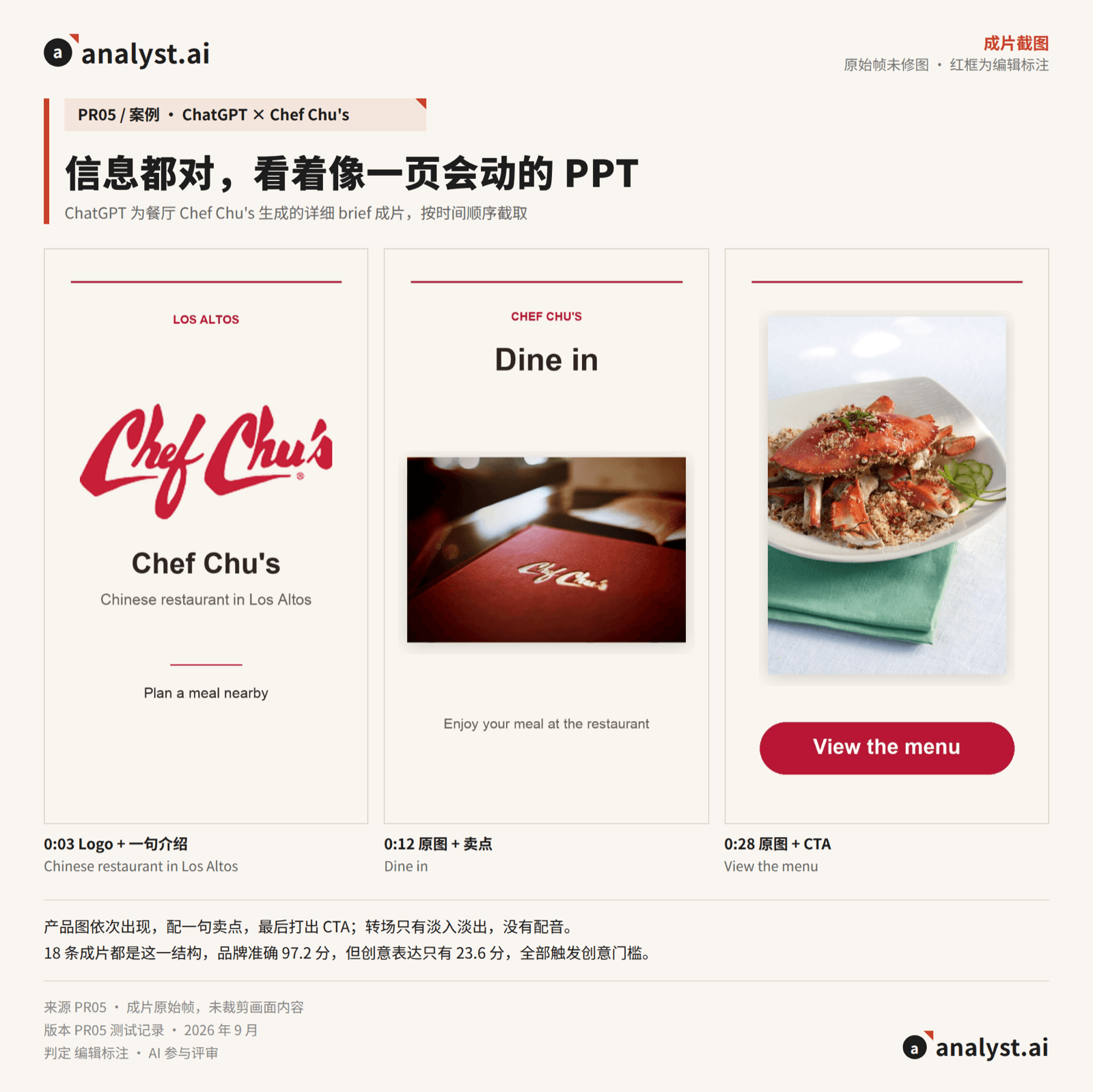
Figure 3. An ad ChatGPT generated for Chef Chu's. Product photos, selling points and the CTA appear in sequence. The information is accurate, but there's no ad idea and no voiceover.
Put the two side by side, and you can see a common trade-off when AI makes ads.
Omneky averaged 76.8 on creative execution, the highest of the four, but all 5 of its ads got brand information wrong. ChatGPT rarely gets things wrong, but what it makes looks more like a slide deck that moves.
An ad you can hand to a client needs both. Today's AI tools often get only one right.
The less you give the AI, the more it guesses for you
As testing went on, we found that what you feed the tool shapes the result too.
Before making an ad, you usually write a brief: a set of requirements for whoever is producing it. What the product is, who it's for, what to emphasize, what can't be said.
Each brand had three product images. For each brand we set two brief conditions. The first gave only the brand name, three images and the closing line. The second added approved product facts, use cases, and claims that must not appear.
The difference was clear.
With the full brief, Captions scored a perfect 100 on product information. With only the brand name and three images, the information score for the same brand, Pythra Forge, dropped straight to 50.
Pythra Forge is a prediction-market strategy tool. In the minimal-brief version, Captions didn't recognize what it does and wrote lines like "clear project blockers, fit your team," which would make sense for almost any office software.
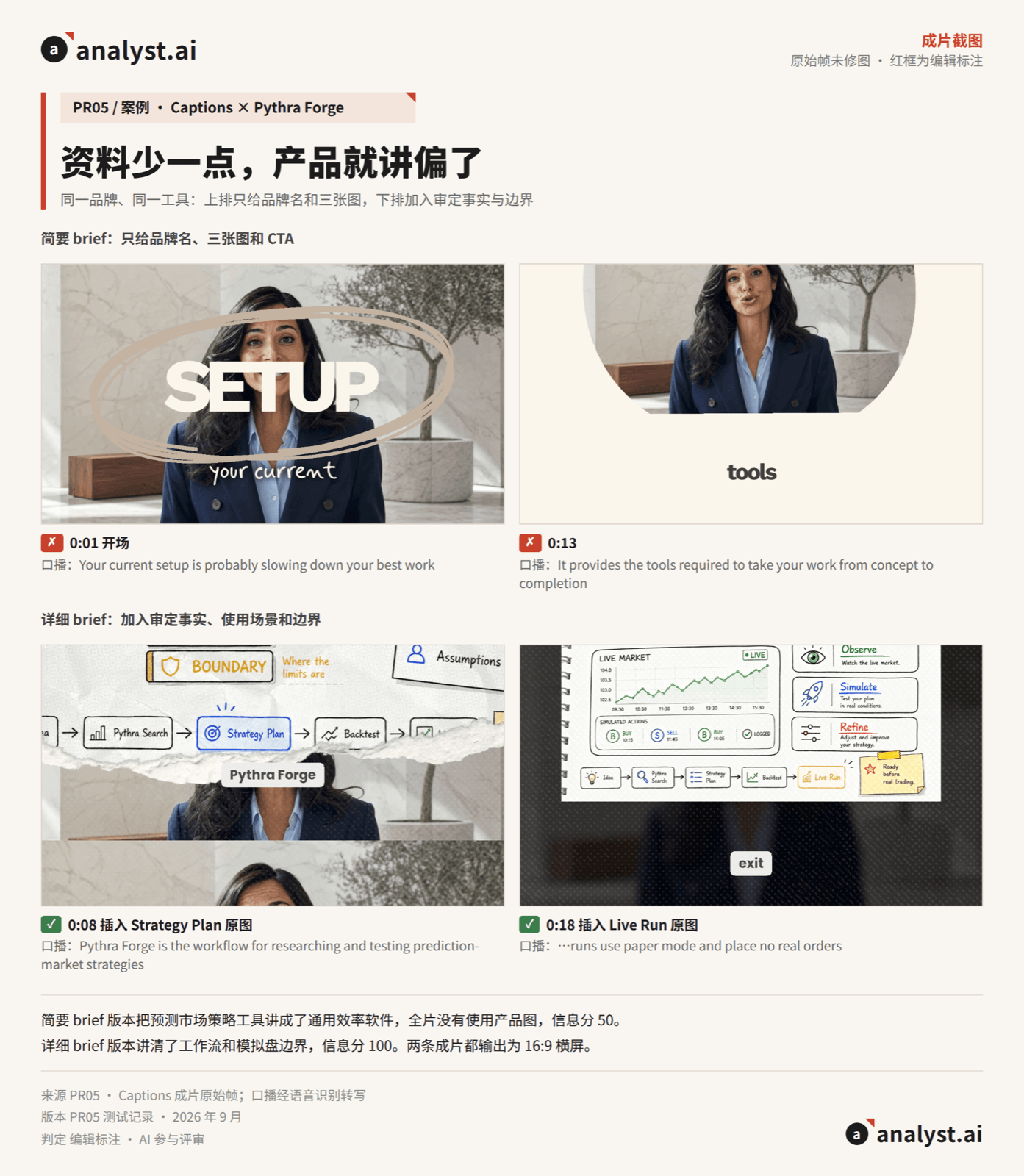
Figure 4. Two ads Captions generated for Pythra Forge. With only the brand name and images, it described generic productivity software; with the full brief, it explained the workflow and its limits.
InVideo AI, on the other hand, fills in content on its own.
In one ad for the restaurant Chef Chu's, the voiceover mentioned dishes it made up. In one for the air-conditioning service company IRBIS, because IRBIS's logo says "plumbing" and "electrical," it added plumbing and electrical services to the voiceover. But IRBIS's brief this time covered only home air-conditioning service, so all of that was out of scope.
AI won't stay quiet just because you didn't say something. It guesses.
"Make me a premium-looking ad" gets it started, but it doesn't draw the boundaries of the facts. If you care that every line in the ad is right, spell these out up front: what exactly the product is, how far the service goes, and which claims must not appear.
Those few lines cost you five extra minutes and might save a whole round of rework later.
Fast and smooth, but still wrong in the details
The other two tools are closer to what most people imagine an "AI video tool" to be.
InVideo AI is like an assembly line. Voiceover, music, footage and transitions all connect, and the first version arrives fast and fairly complete. It scored 96.4 on messaging and 73.3 on workflow, the most solid fundamentals of the four.
When it gets it right, its ads look good. One for the Owala FreeSip bottle, with product close-ups on a dark background and brown plaid, scored 84.0 on aesthetics.
Its problems are assembly-line problems too. Some ads are still product-photo slideshows ending on a long text card. One for the backpack brand Bellroy took landscape product shots, added black bars and stuffed them into a vertical frame. The IRBIS and Chef Chu's logos got cropped.
These errors are small, but they're the kind people spot at a glance once the ad is out.
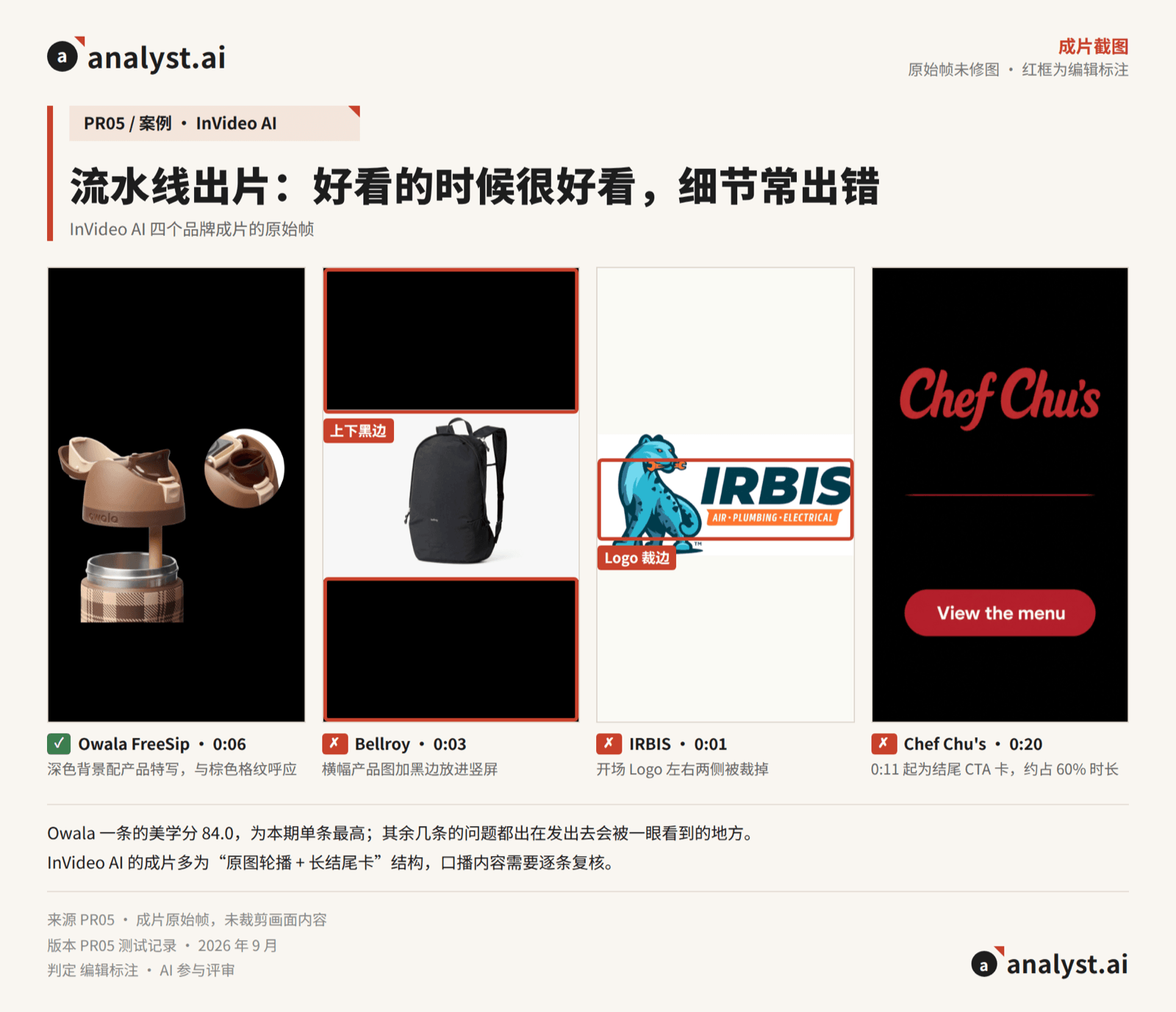
Figure 5. Four InVideo AI ads. The Owala ad had the highest single aesthetics score of the round; the other three show black bars, a cropped logo and an overlong end card.
Captions is like an on-camera presenter. It has a virtual avatar present the product, which adds a sense of "someone is talking to you." With the full brief, it opens with a question, then explains how to use the product, and its voice was the most engaging of the round. It scored 74.0 on aesthetics, with avatar, captions, transitions and color all fairly polished.
Its problems are aspect ratio and sample size. Both ads were landscape, while people now watch short videos almost entirely in vertical. And Captions made only 2 ads this time, too few to show that it would perform the same for every brand.
Change one line, and you find out whether it's usable
Ads are rarely final on the first pass.
The client wants a different closing line at the last minute, marketing needs to update a promotion, or you notice the end of the ad still mentions last month's campaign. These jobs are more routine than clicking "Generate" the first time.
So we added another round. On the full-brief ads, we asked the tools to do one thing: replace the closing line.
ChatGPT got all 6 right and removed the old line cleanly. The cost is that every change means regenerating the whole ad in the chat. It has no timeline like editing software, so it can't touch just the last few seconds.
InVideo AI has buttons to edit script segments and swap footage, and looks the most convenient. But in the versions we got, the line never changed.
Omneky changed the voiceover to the new line, but the old one stayed on screen. Your ears hear one line, your eyes see another.
Captions wasn't tested on this, so we can't evaluate it yet.
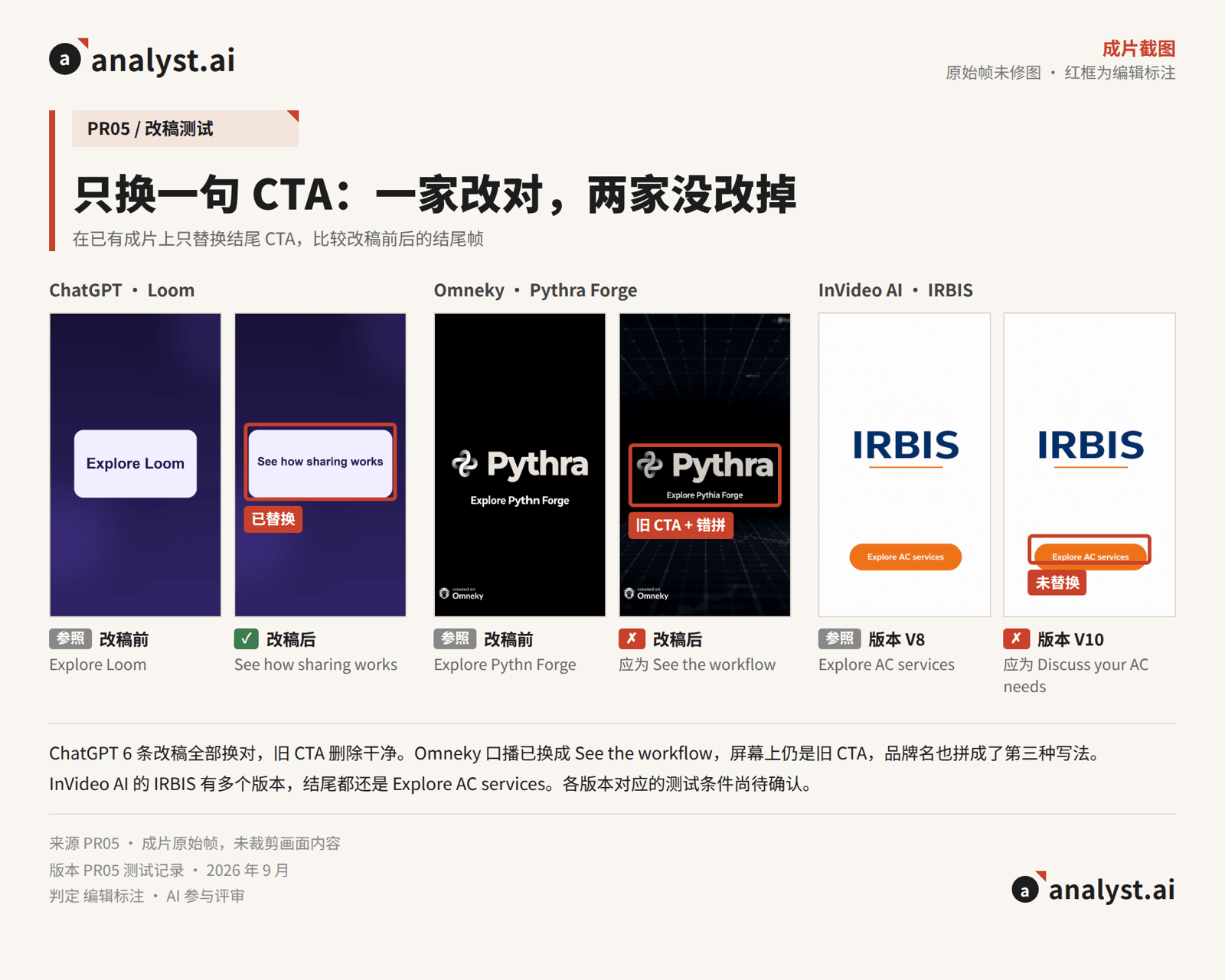
Figure 6. End frames before and after revision. ChatGPT swapped in the correct CTA; Omneky still shows the old CTA on screen; InVideo AI's IRBIS versions didn't change.
At this point, the question has shifted from "who makes better ads" to "who holds up under revisions."
An edit button in the interface doesn't mean the change actually lands in the ad. After every change, it's worth watching the whole thing again.
How the four tools performed
After these examples, the scores are easier to understand.
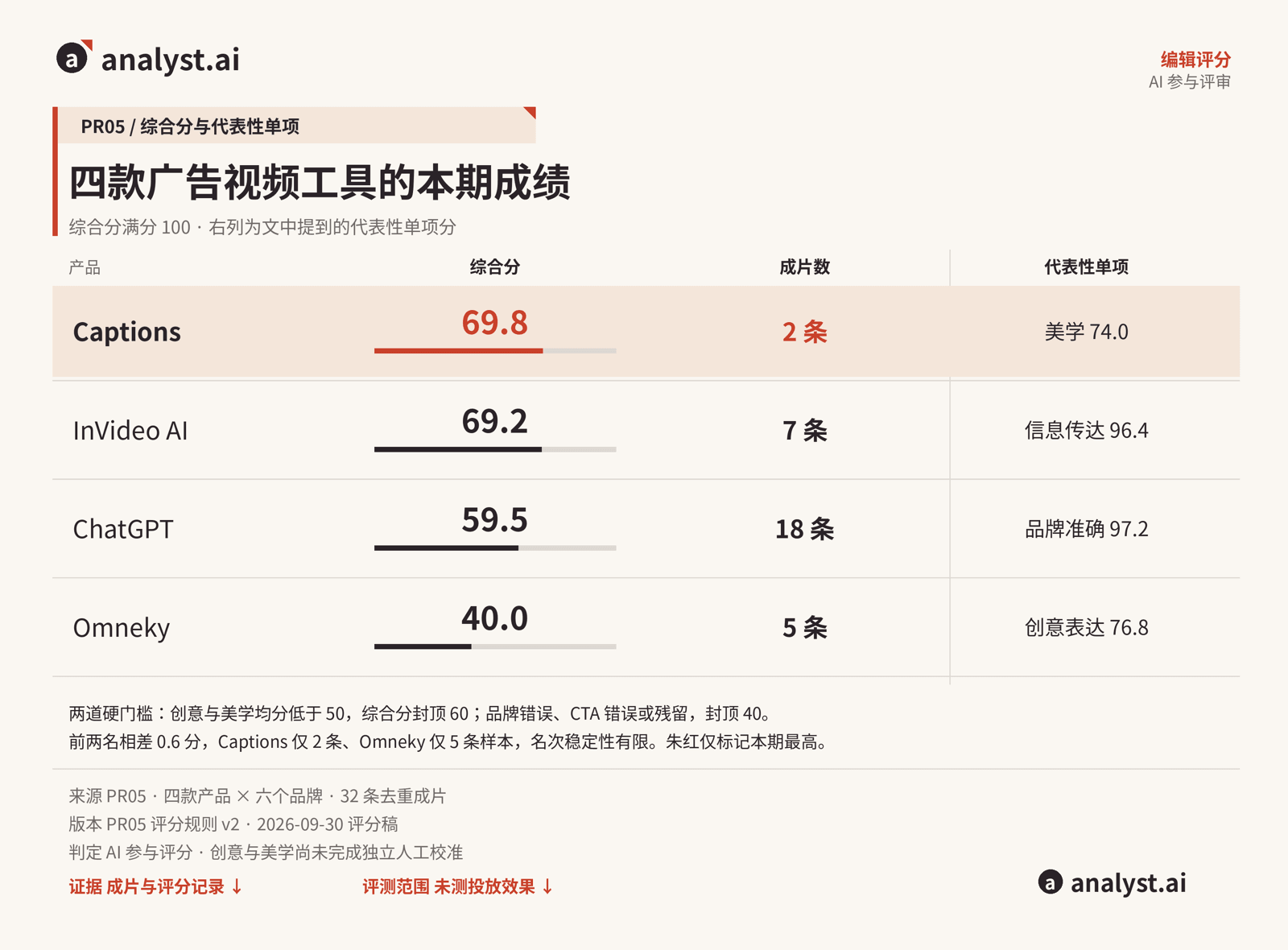
Figure 7. Overall scores for the four tools this issue. The right column shows representative single scores mentioned in the text; sample sizes vary, so rankings apply to this issue only.
| Tool | Overall | Ads | Biggest strength | Watch out for |
|---|---|---|---|---|
| Captions | 69.8 | 2 | Virtual presenter, engaging voice | Landscape output, tiny sample |
| InVideo AI | 69.2 | 7 | Fast output, solid information coverage | Templated feel, cropped logos, invents content |
| ChatGPT | 59.5 | 18 | Most brand-accurate | Doesn't feel like an ad; every edit means a full redo |
| Omneky | 40.0 | 5 | Most creative | Wrong brand and closing line |
The overall score is out of 100, a weighted total of five categories. Creative execution carries the most weight at 35%, followed by aesthetics at 25%, messaging and brand accuracy at 15% each, and workflow at 10%.
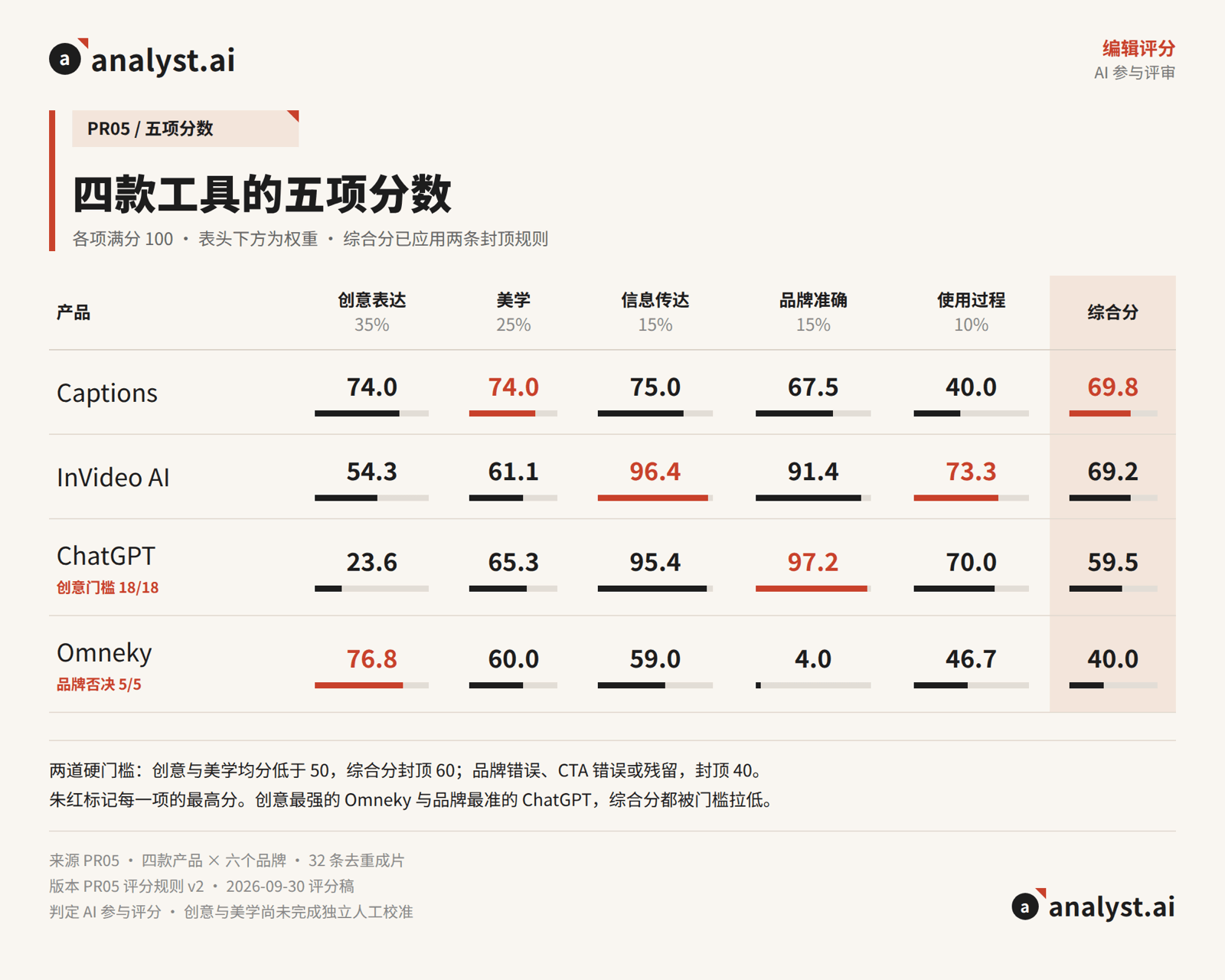
Figure 8. The four tools' scores in each of the five categories. Red marks the top score in each category; overall scores reflect the two caps.
There are also two hard rules.
First, if the average of creative and aesthetics is below 50, the overall score is capped at 60. All 18 of ChatGPT's ads hit this line, and it ended at 59.5.
Second, a misspelled brand name, another brand appearing, a wrong closing line or an old line not removed caps the overall score at 40. Omneky's overall score is exactly 40.0.
So the most creative and the most brand-accurate tools ended up at the bottom. The idea behind the rules is simple: if an ad makes the kind of mistake that gets a client on the phone, whatever it did well before doesn't count.
One more caveat: don't take the ranking too literally. Captions and InVideo AI are only 0.6 points apart, Captions made only 2 ads, and Omneky only 5. The table is better for understanding each tool's temperament than for declaring which one is definitely better.
If you want to make ads with AI right now
None of the tools this time produced an ad you could publish without checking. But each one can save you time at some stage.
If you're looking for shots and ad ideas, look at what Omneky makes and treat it as a source of inspiration. Check every frame of the ad itself.
If you need a batch of short social videos fast, start with InVideo AI. It's the easiest way to get a complete first version, but check the voiceover, logos and aspect ratio again.
If you want to sort out the product information, selling points and script first, use ChatGPT for that; what it writes rarely has errors. Then hand it to a designer or video tool for the visuals.
If you already have a script and want a virtual presenter to deliver it, try Captions, but first check whether the output is vertical or landscape.
Whichever you use, check these three things before anything goes out.
Brand name and logo, especially in the last few seconds, and any text the AI redrew.
Whether the voiceover says anything you didn't provide, such as dishes that don't exist or services you don't offer.
The closing line, both on screen and in the audio. Check revised versions again.
All three come from problems that actually showed up in this test.
A note on scope: this comparison covers 4 tools, 6 brands and 32 deduplicated ads, and the tools made different numbers of ads. AI was involved in scoring, and the creative, aesthetics and information checks haven't had independent human review yet. We also didn't run these ads, so the scores reflect only how well the ads were made, not how many clicks or purchases they'd bring.
AI can already get you a first version fast, and sometimes it looks pretty good.
Whether that ad can run is still up to you to watch from start to finish. Especially the last few seconds.